
Every year, contractors ask the same question: “What’s the best construction software for 2026?”
And every year, they’re flooded with:
- feature lists
- buzzwords
- “AI-powered” claims
- tools that look impressive—but don’t actually solve daily problems
Here’s the truth most people won’t say: The best construction software for 2026 isn’t the one with the most features. It’s the one that gives you the clearest view of what’s really happening in your projects.
Why “best” looks different in 2026
Construction hasn’t suddenly become more complex. But decision-making has become more urgent.
In 2026:
- margins are tighter
- timelines are less forgiving
- owners expect faster answers
- teams are stretched thinner
What builders need isn’t more tools. They need clarity.
The real question you should be asking instead of asking:
“What software has the most features?”
Ask this instead:
“What software helps me see problems early—before they turn into delays or losses?”
Because most construction failures don’t come from lack of effort. They come from lack of visibility.
What makes construction software “the best” in 2026
The best construction software in 2026 does three things extremely well:
1. It gives real-time clarity on project progress (This is how delays are prevented)
If your software can’t clearly show:
- what was planned
- what’s actually done
- what’s falling behind right now
Then it’s not helping—you’re still guessing. Most delays happen because builders don’t have real-time clarity on progress. Good software makes progress visible early, not explainable later.
2. It gives real-time clarity on costs and estimates (This is how overruns are avoided)
Many projects “look profitable” until they’re not. That’s because:
- costs update late
- estimates live in Excel
- actuals live somewhere else
Cost overruns happen because builders lose cost clarity long before they realize they’re losing money.
In 2026, the best software connects estimates, costs, and progress—so you can see leaks early, not after the damage.
3. It reduces operational chaos instead of adding to it (This is how teams work better)
If software requires:
- heavy setup
- constant manual updating
- multiple disconnected tools
It becomes part of the problem. Construction operations become chaotic when there’s no single source of clarity. The best tools simplify workflows instead of complicating them.
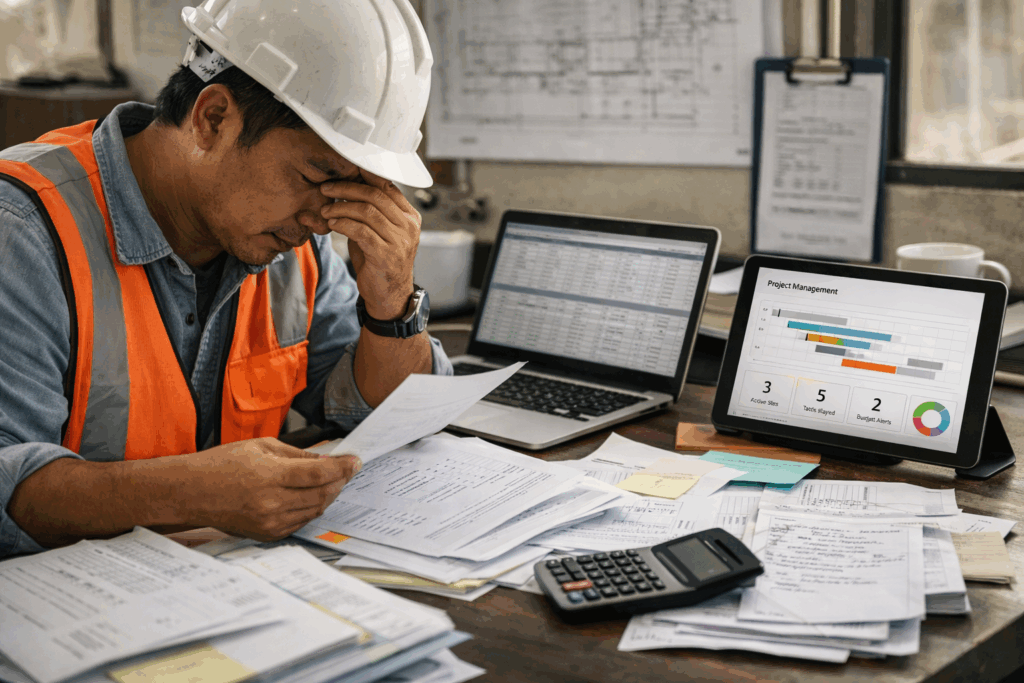
Why “Excel + apps” no longer works in 2026
Many builders still rely on:
- Excel for estimates
- messaging apps for updates
- separate tools for scheduling, costing, and reporting
- delayed decisions
- inconsistent data
- constant follow-ups
- owner-dependent systems
This worked before. But today, it creates:
The problem isn’t Excel itself. It’s that nothing is connected.
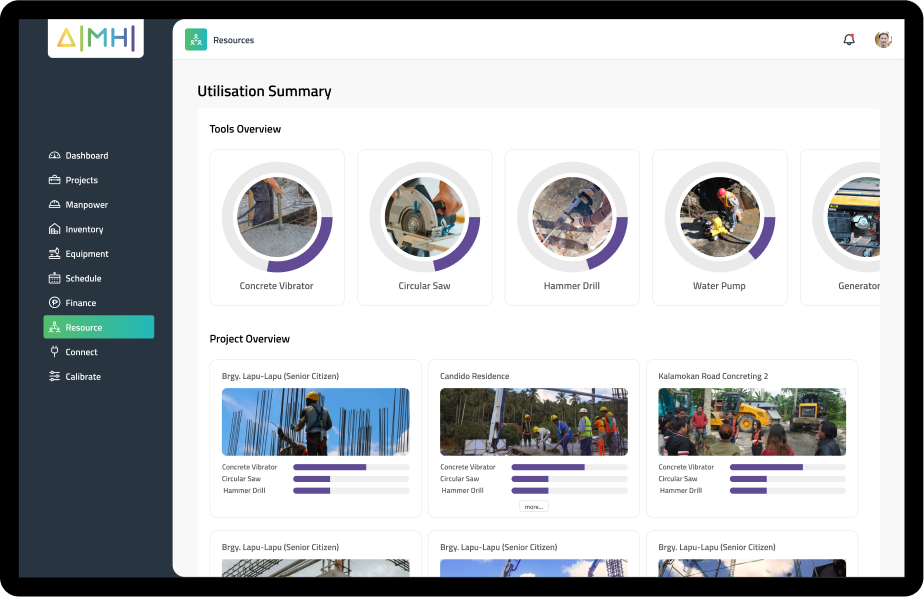
How AIMHI Construction App fits into the 2026 conversation
AIMHI was built around a simple idea:
Builders don’t need more software. They need more clarity.
That’s why AIMHI focuses on:
- making progress visible
- keeping cost movements transparent
- connecting estimates, schedules, and actuals
- reducing manual work
Not to impress with features—but to help builders see clearly and decide earlier.
If you’d like to explore how AIMHI helps builders gain clearer visibility on project progress, costs, and overall performance, you can visit our website or follow AIMHI on Facebook, where we regularly share practical insights on construction clarity and digital transformation.
If you want to see how this clarity works in practice, you may also attend a demo to better understand how AIMHI supports real-world construction operations. For questions or conversations about choosing the right tools for 2026, you may reach us at teams@aimhi.ai
The mindset shift for 2026 builders
Here’s the shift that matters most: The best construction software isn’t the one that promises control. It’s the one that gives you clarity.
When you can see clearly:
- delays are caught earlier
- cost overruns are manageable
- teams move with confidence
- decisions are based on reality
That’s what “best” really means in 2026.
Final thought
If you’re choosing construction software for 2026, don’t ask:
- “What’s popular?”
“What’s advanced?” - “What has AI?”
Ask this instead:
“What helps me understand my project clearly—before problems become expensive?”
That answer will lead you to the right tool. And more importantly, to better projects.