
Why construction is short on workers in 2026
Construction isn’t short on work in 2026. It’s short on people.
This isn’t a “feels like” issue — it’s measurable. In the U.S. alone, Associated Builders and Contractors (ABC) estimates the industry will need to attract ~499,000 additional workers in 2026 to meet demand. ABC+1
And it’s not just future projections. Contractors are already feeling the gap today: the Associated General Contractors of America (AGC) reported that 92% of contractors are having a hard time filling open positions. Associated General Contractors
Even long-term labor data supports the trend. The U.S. Bureau of Labor Statistics projects about 649,300 openings every year (on average) in construction and extraction occupations due to growth and replacement needs. Bureau of Labor Statistics
If you’re in the Philippines, the construction sector is also a major employer — PSA data cited by BusinessMirror showed construction employment at 4.76 million in November 2024, close to 10% of the labor force. BusinessMirror
Which means even a small % shortage becomes a big operational problem for projects.
In the Philippines, the challenge isn’t just headcount — it’s capability. According to the Department of Trade and Industry (DTI) and industry partners, many construction firms report difficulty finding workers with the right mix of technical, coordination, and digital skills, even when manpower is available.
This skills gap means teams spend more time correcting mistakes, coordinating manually, and compensating for inefficiencies — which puts even more pressure on already limited labor.
Why labor shortages feel worse than they used to
Labor shortages aren’t new — but they hit harder now because projects move faster and margins are tighter. When you’re short on manpower, every delay becomes more expensive, and every coordination issue multiplies.
This is why “we’re short-staffed” doesn’t just mean slower work. It often means:
- more rework
- more waiting time
- more last-minute changes
more burnout
This pressure is amplified in the Philippines by the scale and pace of ongoing infrastructure and private development projects. Government infrastructure programs and growing private-sector construction demand have tightened timelines — while labor availability and skills development have struggled to keep pace.
The result is a work environment where fewer people are expected to deliver faster outcomes, making clarity and coordination more critical than ever.And the data is consistent with this reality: AGC has repeatedly tied workforce shortages to project challenges like delays (because crews and key roles simply aren’t available when needed). Associated General Contractors
How builders stay productive with fewer people
Here’s the thing I’ve learned as a contractor (and later as a tech founder building around these pain points):
The most productive teams aren’t the biggest. They’re the clearest.
When manpower is limited, productivity doesn’t come from “pushing harder.” It comes from:
- clear priorities
- fewer handoffs
- faster decisions
- less rework
Because when you can’t add people, the only leverage left is reducing friction.
Why “working harder” is not a labor strategy
When you’re short-staffed, the default reaction is overtime and pressure. But that usually leads to:
- mistakes
- safety risks
- fatigue
- higher turnover
And turnover makes the shortage worse.This is why the real goal in 2026 is not “maximize effort.”
It’s protect effort—so every hour of labor actually produces progress.
What systems actually help manage limited manpower
This is where most construction teams miss the real leverage. The best “labor shortage strategies” are not just hiring strategies. They’re visibility strategies.
The systems that actually help in 2026 are the ones that:
- show where the project truly stands (not last week’s version)
- make today’s priorities obvious
- reduce manual follow-ups and chasing
- surface blockers early so decisions happen before delays stack
Because the labor gap isn’t only about missing workers — it’s about how much time is lost when teams can’t see clearly.
Where technology fits — and where it doesn’t
Technology doesn’t replace skilled workers. But it can protect their time. The right tech reduces admin load and coordination delays. The wrong tech adds more complexity and “encoding work.”
This is why digital tools matter most when the workforce is tight: you don’t have spare manpower to waste on:
- duplicate encoding
- scattered updates across apps
- version confusion
- constant follow-ups
And we know the demand pressure isn’t slowing: ABC’s 2026 worker requirement is already a sign that labor constraints will remain a defining constraint for how projects get executed. Deloitte+1
How AIMHI helps teams do more with the people you have
AIMHI was built around a contractor reality:
When manpower is limited, clarity becomes non-negotiable.
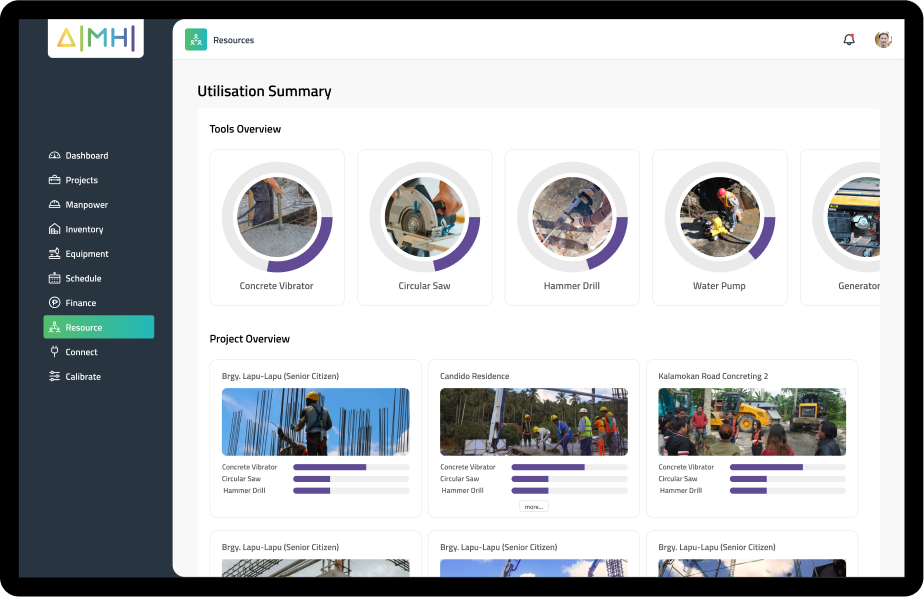
AIMHI helps teams reduce manpower waste by improving:
- visibility of progress
- visibility of costs and estimate drift
- coordination without constant follow-ups
- early detection of “we’re falling behind” signals
Not to replace people — but to make sure people’s effort actually counts.
If you’d like to see how teams can stay productive despite labor shortages, you can explore AIMHI through our website or follow us on Facebook, where we share practical insights on construction clarity and project coordination.
You may also attend a free demo to see how AIMHI helps teams gain real-time visibility into progress, costs, and priorities. For questions or conversations, you can reach us at
The mindset shift construction leaders need in 2026
The key shift is simple:
Labor shortages aren’t solved only by finding more people.
They’re managed by making better use of the people you already have.
And data supports the urgency: when the industry needs hundreds of thousands more workers (like the ~499,000 estimate for 2026 in the U.S.), the builders who win will be the ones who build systems that let small teams run like strong teams. Deloitte+1
Final thought
If you’re short on manpower in 2026, you don’t need more pressure.
You need more clarity.Because when people are scarce, clarity is your strongest multiplier.